GDXM
GDXM is a web dashboard for crypto traders whose goal is to bring transparency to crypto markets, by delivering fast access to indispensable news, data and meaningful information from multiple diverse sources. The acronym stands for Global Digital Exchanges Monitor, since it enables traders to monitor and compare performance of the major crypto assets and understand global patterns.
I built it together with Nicola Farenga in my first year of university, and released its first version to the public in 2018, featuring real-time prices and market capitalization information, available for both phones and computers.
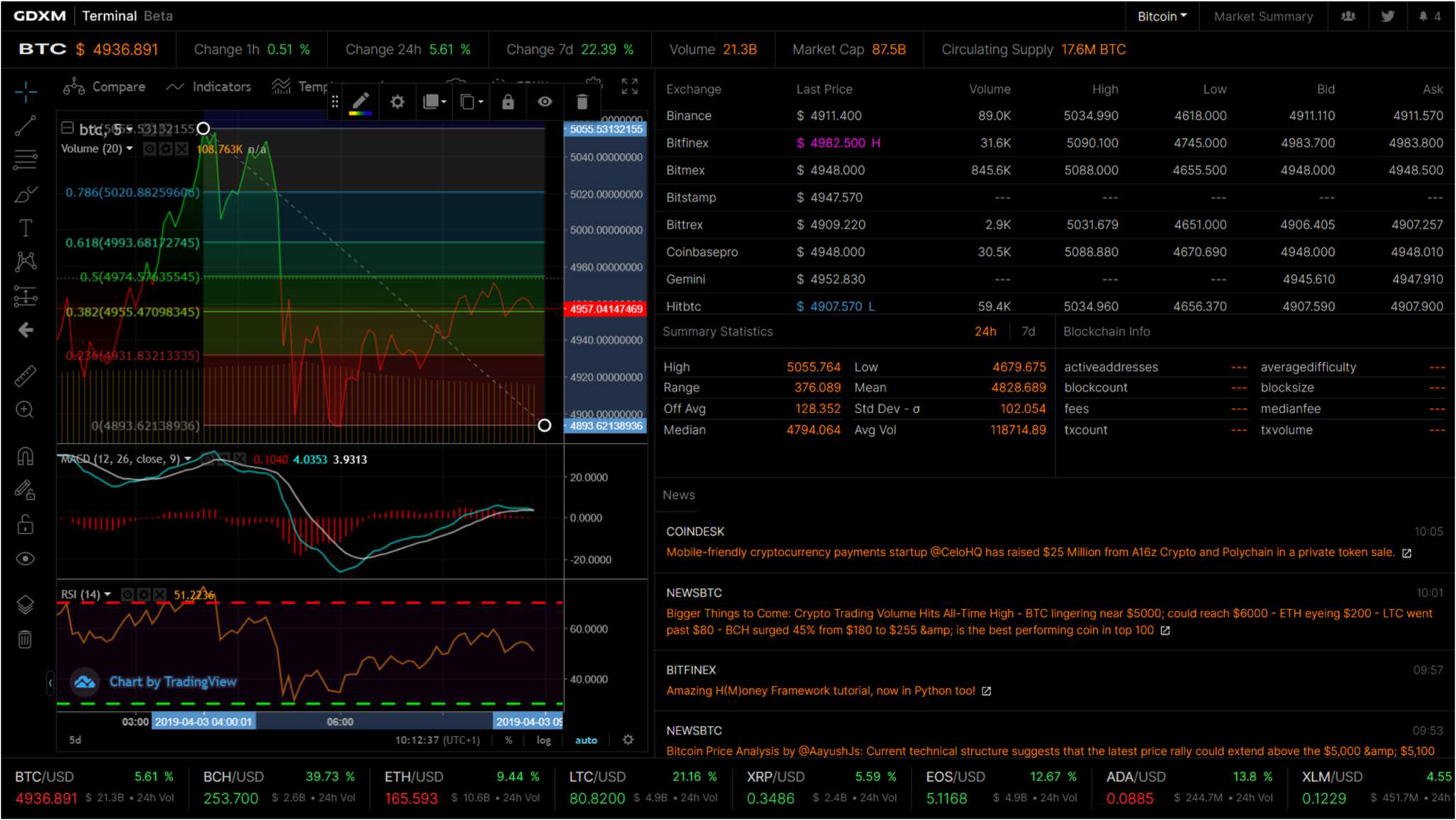
Over few months several features have been added to the first prototype, refining the UI according to users’ feedback and reaching the final version called GDXM Terminal. The terminal was designed to provide a complete set of tools to analyse and navigate the multi-faceted crypto market and is based on the following main components:
- interactive charts powered by TradingView, to allow users add their preferred indicators and drawings, with an option to keep the layout across sessions
- daily and weekly statical information, such as central tendency and statical dispersion, to quickly summarise the asset’s behavior
- scrollable monitoring table, showing aggregated data about low, highs, bids and asks for each exchange platform and indicating in real-time the ones with highest and lowest price
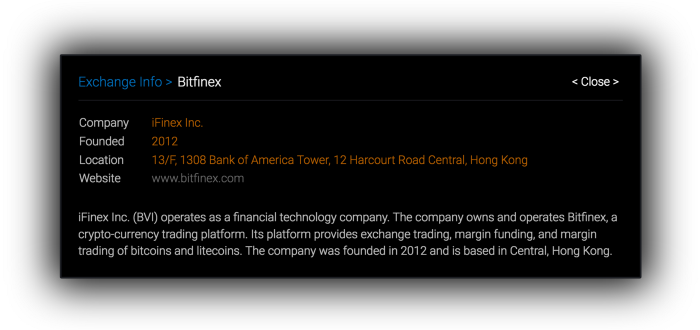
- exchange information panel, showing the main company information and a brief description
- a news panel providing information from the main online sources as well as official statements from the tracked exchange platforms (each with a link to the source page)
Technologies and architecture
Architecture of the system is composed of a Node.js backend based on Express and a React frontend. Communication between the two happens with both REST APIs, to retrieve structural information, and WebSockets, for real-time updates.
The backend application is responsible of aggregating data from multiple sources, orchestrating data retrieval, and uniforming a diverse set of authentication strategies, communication protocols, and update frequencies into a common data ingestion pipeline. After years of professional experience in the field, this looks now as a trivial orchestration and ETL task, but at the time, being in the first year of CsEng, designing such architecture felt as a big achievement :)
The frontend application is instead responsible of rendering the incoming data, signalling real-time updates to users, to make evident for them which information has changed, and providing computed insights and visual indicators to asssist the analysis. The whole layout is designed to be reusable and agnostic of the list of currencies and exchanges tracked by the system. UI is based on a mix of pre-built layout frameworks and custom components, tweaked with an iterative approach based on users’s feedback and usability research.